
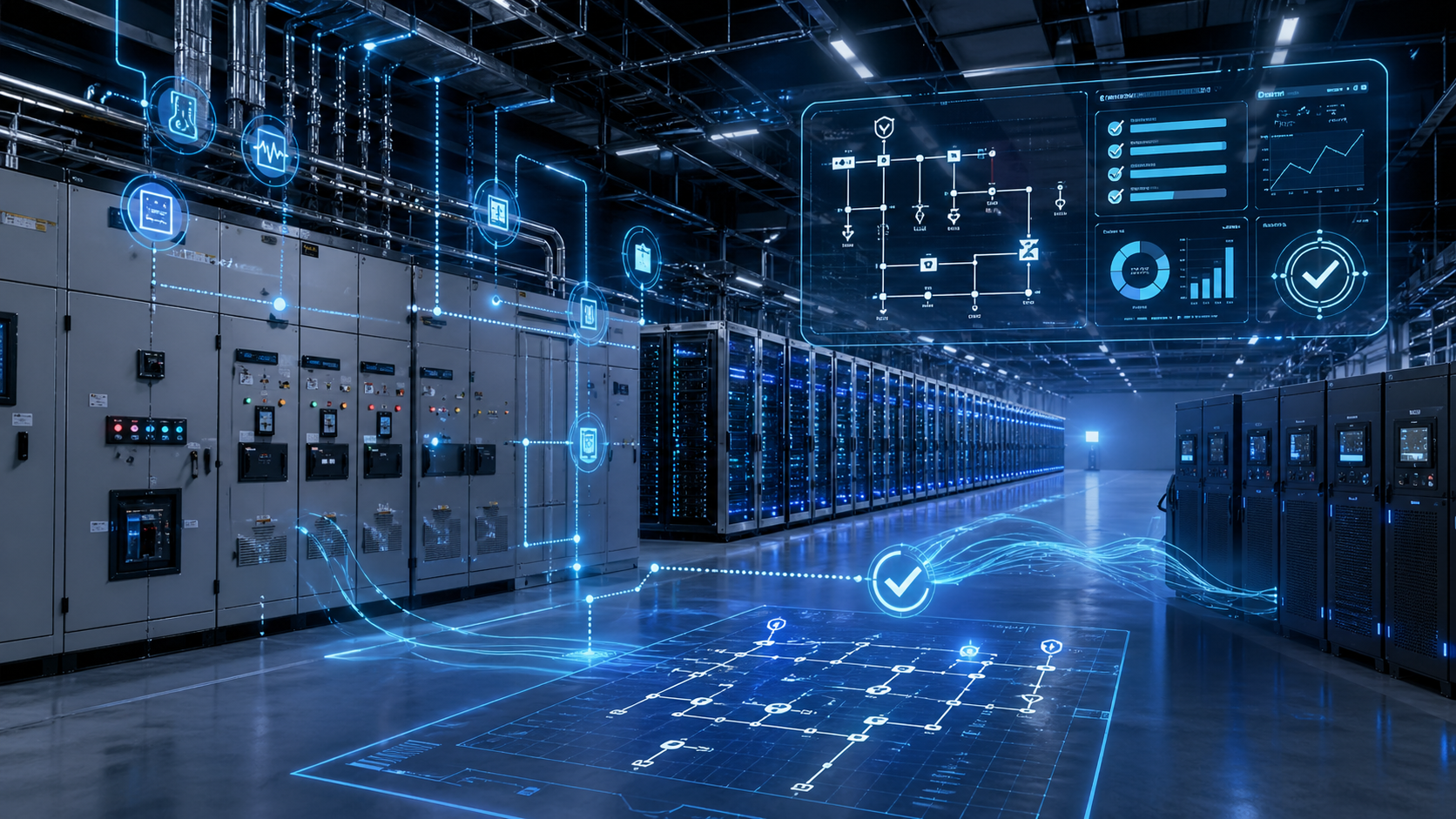
EMS vs EPMS:
WHAT IS THE DIFFERENCE?
An EMS (Energy Management System) manages energy performance — cost, consumption, emissions and optimization. An EPMS (Electrical Power Management System) manages electrical power infrastructure — uptime, power quality and the reliability of the systems that keep a facility running.
They are related, and they often share the same meters and networks, but they answer different questions. The EMS answers: how much energy are we using, what is it costing us, and how do we optimize it? The EPMS answers: is our electrical system healthy, and will the power stay on?
Complex, mission-critical or multi-site facilities usually need both — ideally as one coherent architecture rather than two disconnected systems. (Our EnergyX® platform provides both EMS and EPMS functions for exactly this reason.)
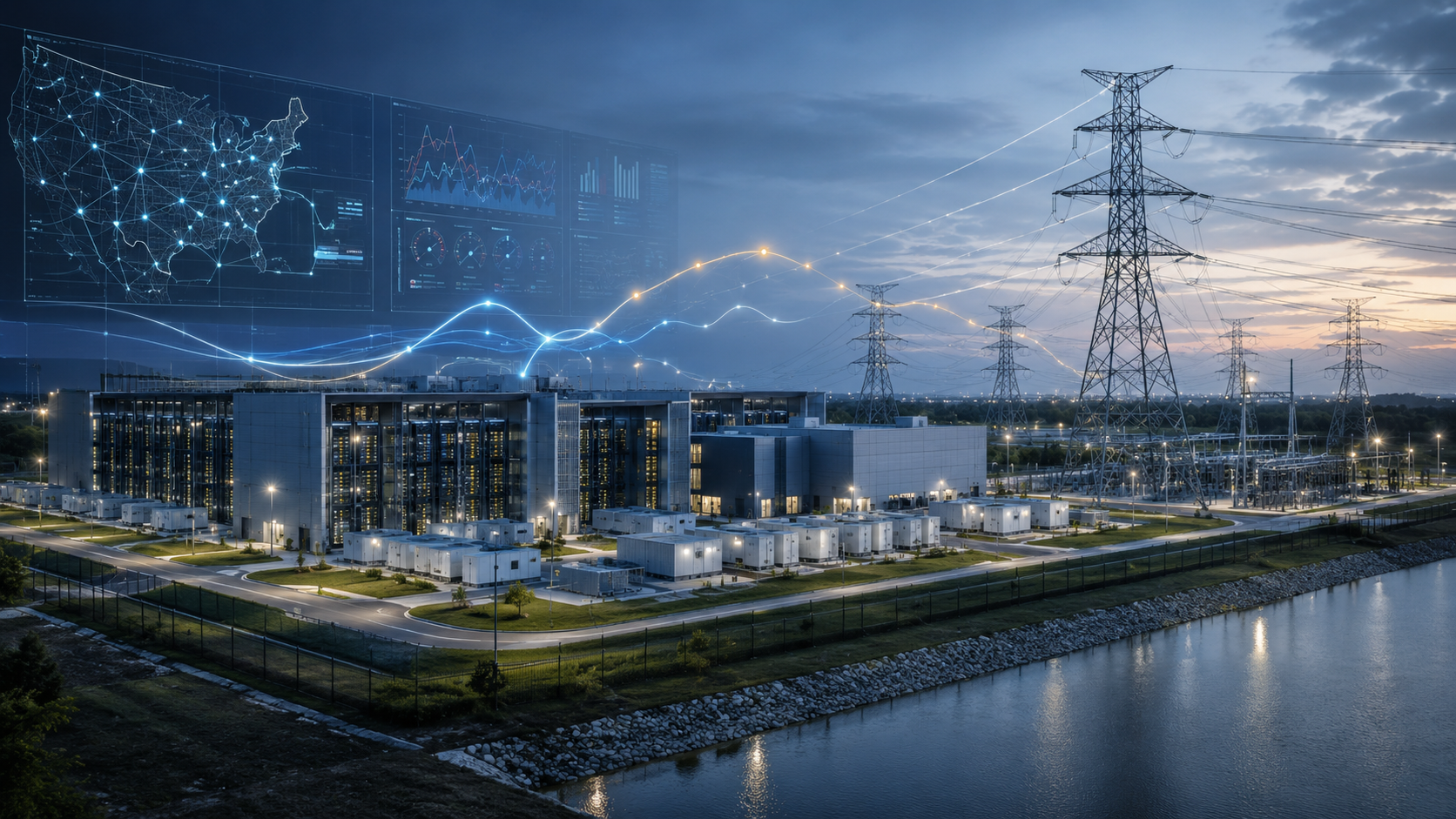
Why this question keeps coming up
As facilities electrify, energy systems get harder to manage. Solar, batteries, EV charging, backup generation, high-density loads and automation are all landing on electrical infrastructure that was never designed for them — while operators face pressure to cut costs, hit sustainability targets, maintain uptime and secure OT networks against cyber risk.
That's why EMS and EPMS now appear in the same conversations. After more than 20 years delivering both — from simple monitoring systems to utility-scale power automation — we can tell you the distinction matters more in practice than it looks on paper. Choosing the wrong one (or assuming one does the other's job) is one of the most common and expensive mistakes we're asked to fix.
What is an EMS?
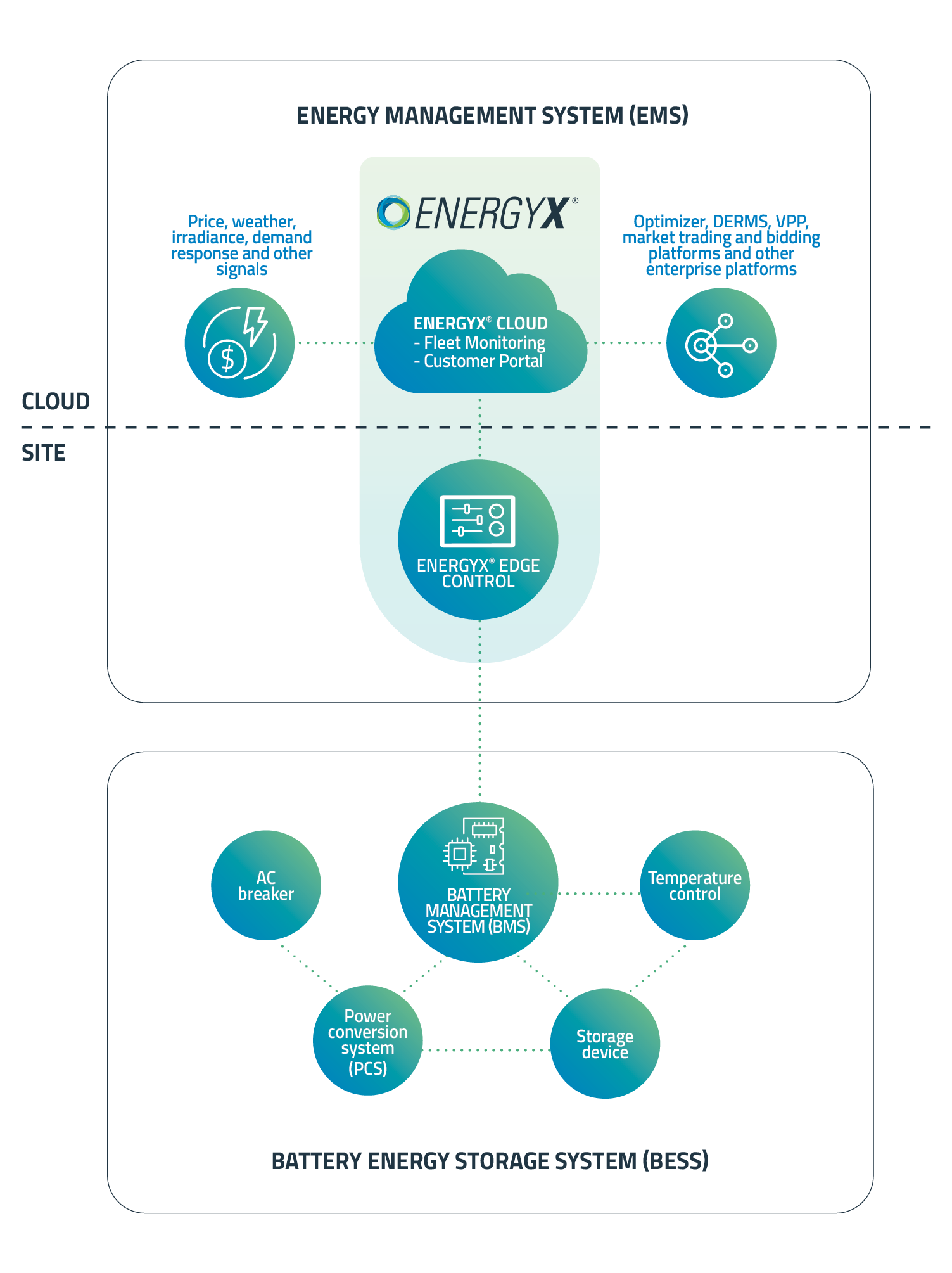
An Energy Management System helps organizations monitor, analyze, optimize and report on energy use. A modern EMS typically provides real-time monitoring, dashboards, alarms, analytics, emissions tracking, utility bill validation, tenant billing and cost allocation, peak demand management, DER monitoring and control, battery optimization, EV charging coordination, energy market participation, and sustainability and compliance reporting.
The more electrified a facility becomes, the more an EMS earns its keep — because DERs rarely deliver just one type of value. A battery, for instance, can support peak shaving, self-consumption, backup power, demand response and market participation. Capturing all of that requires software that can coordinate assets and inform decisions, not just log kilowatt-hours.
Isn't my BMS already doing this?
Usually not. A Building Management System gives useful visibility into HVAC and mechanical plant, and often basic energy trends. But it generally lacks the power quality analysis, DER control, tariff intelligence, market participation logic and tenant-level allocation a modern electrified facility needs. An EMS fills that gap by focusing specifically on energy outcomes.

WHAT THIS LOOKS LIKE IN PRACTICE
At Deakin University's microgrid, we deployed our EnergyX® platform to integrate 15,000 data tags from 90 IoT devices — every DER controller, meter and piece of electrical equipment in a single user experience. At the Melbourne Cricket Ground, a 100,000-seat stadium runs a complete energy management system covering electricity, water and gas. And our work at ANZ Bank's headquarters won Schneider Electric's Digital Power Project of the Year for the business results it delivered.
What is an EPMS?
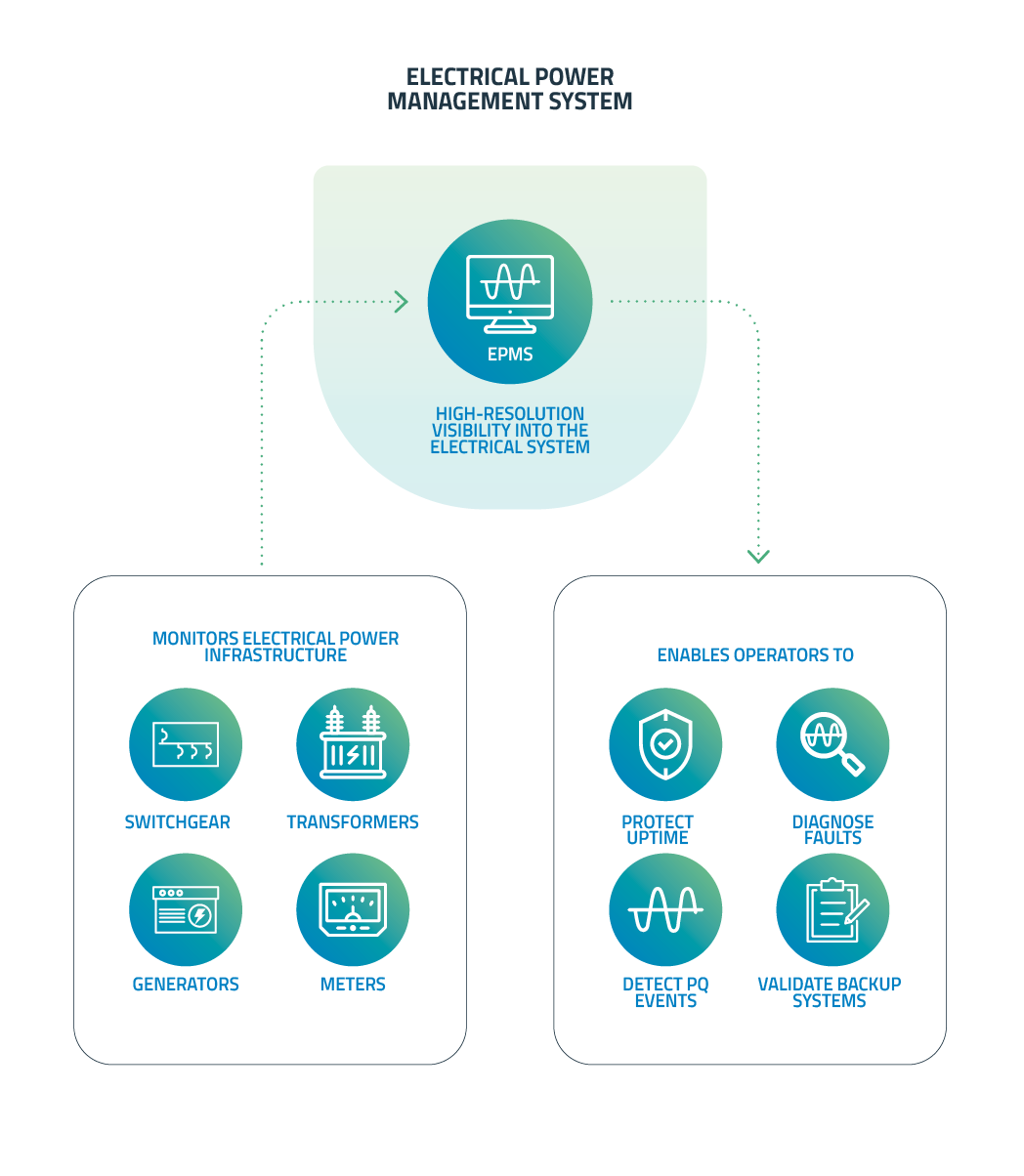
An Electrical Power Management System is focused on the electrical power infrastructure itself: switchgear, substations, UPS systems, generators, transformers, meters, protection relays, busways, main distribution boards, critical load paths and backup power systems. Its job is high-resolution visibility into the electrical system, so operators can protect uptime, diagnose faults, detect power quality events, validate backup systems and respond fast to abnormal conditions.
EPMS is the standard in mission-critical environments — data centers, hospitals, advanced manufacturing, battery and cathode production, airports, campuses, utilities and critical infrastructure — anywhere power is not just a utility cost but a core operating constraint.
WHAT THIS LOOKS LIKE IN PRACTICE
When a legacy integrator failed Phase 1 of a 190 MW hyperscale data center EPMS deployment, we stepped in with less than three weeks' notice, brought the codebase under Git version control, ran synchronized on-site and off-site engineering, corrected the existing errors while executing Phase 2 — and delivered on schedule. Time to power was preserved.
Scale is the other reason EPMS architecture matters. For one operator we automated commissioning and upgrades across a 26,000-device EPMS spanning 11 data centers, saving weeks of engineering time. If every site has a custom-engineered monitoring system, deployment gets slower, costlier and harder to support; a standardized EPMS architecture reduces configuration drift and speeds commissioning across a portfolio.
And in manufacturing, power quality can be a yield problem before it's an uptime problem. At a first-of-its-kind cathode facility, we deployed advanced waveform capture to monitor severe harmonics, protecting capital-intensive production yields and integrating power data globally.

EMS vs. EPMS at a glance
| EMS Energy Management System |
EPMS Electrical Power Management System |
|
|---|---|---|
| Primary purpose | Manage energy performance | Manage electrical power infrastructure |
| Core question | “How do we use energy better?” | “Will the power stay on?” |
| Typical focus | Energy use, cost, emissions, DERs, reporting, optimization | Uptime, power quality, electrical reliability, critical power systems |
| Common users | Facility managers, energy managers, sustainability teams, asset owners | Electrical engineers, data center operators, critical facility and operations teams |
| Example outcomes | Lower energy cost, demand response revenue, compliance reporting | Faster fault diagnosis, validated backup systems, protected time to power |
There is overlap — both may use meter data, raise alarms, provide dashboards and integrate with other OT systems. But the purposes differ: the EMS optimizes energy strategy; the EPMS protects electrical continuity.
EMS vs. EPMS in Data Centers
Data centers show the difference clearly. A data center EMS helps operators understand total consumption, cost by site, carbon impact, demand peaks, efficiency trends, DER performance, battery dispatch opportunities and market participation. A data center EPMS helps operators understand electrical capacity, switchgear status, UPS performance, generator readiness, power quality events, critical load paths, commissioning status and fault conditions.
In high-availability environments, poor electrical visibility translates directly into outage exposure, SLA risk, delayed commissioning, capacity planning errors and operational inefficiency. That's why hyperscale and colocation operators treat the EPMS as part of the critical path to power — not an afterthought bolted on during fit-out.
The mistakes we see most often
After two decades of deployments — and a number of rescue jobs — these are the patterns that cost facilities the most:
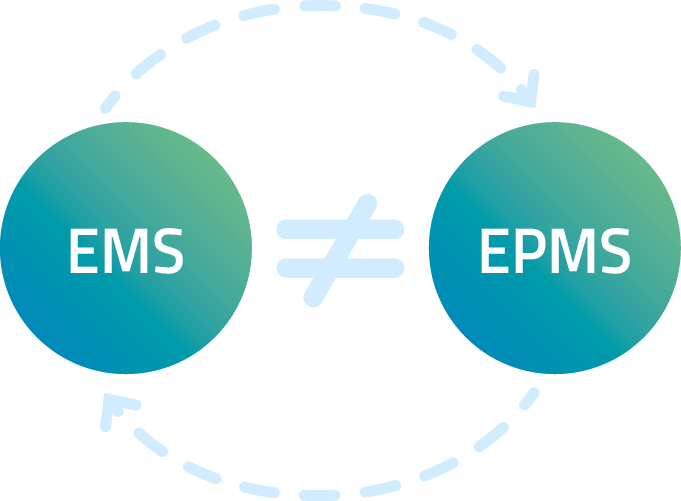
1. Treating EMS and EPMS as interchangeable.
They're related, not the same. A complex facility usually needs both, designed together.
2. Assuming a BMS is enough.
Mechanical visibility and basic energy trends won't give you power quality analysis, demand response, tenant billing, battery optimization or electrical resilience.
3. Using energy reports as a substitute for electrical visibility.
A report can tell you how much energy a site used last month. It won't reveal the harmonics degrading your equipment, a generator that won't start, or risks building inside your distribution system.
4. Ignoring OT network design.
Every energy and power management system depends on the network beneath it. Security, resilience, deterministic performance, protocol diversity and lifecycle support all matter — a weak OT architecture undermines even the best software. It's why cybersecure operations are a first-class part of how we design systems, not a bolt-on.
5. Ignoring data quality.
A misconfigured meter, a dropped communication link, two vendors calculating values differently — the dashboards still show numbers, but the numbers stop supporting good decisions. Energy reporting, emissions calculations, tenant billing, capacity planning and outage investigations are only as good as the underlying data. This is why we treat EMS vs. EPMS as a data architecture question as much as a software category: device hierarchy, naming conventions, governance and lifecycle support decide whether the system stays trustworthy as the facility changes.
How AZZO makes EMS and EPMS work together
EMS and EPMS are complementary, not competing, but they only work as one system if someone designs them to. That what we do with EnergyX®, integrating the two functions into a single architecture, built on trusted data from the field device up:
Field devices measure and interact with the physical electrical system.
PLCs, RTUs and gateways collect data and execute control logic.
EPMS functions – real-time diagrams and alarming, providing deep electrical visibility, power quality analysis and critical infrastructure monitoring.
EMS functions – dashboards, reports and analysis tools, for energy cost management, expansion planning, and sustainability & compliance reporting
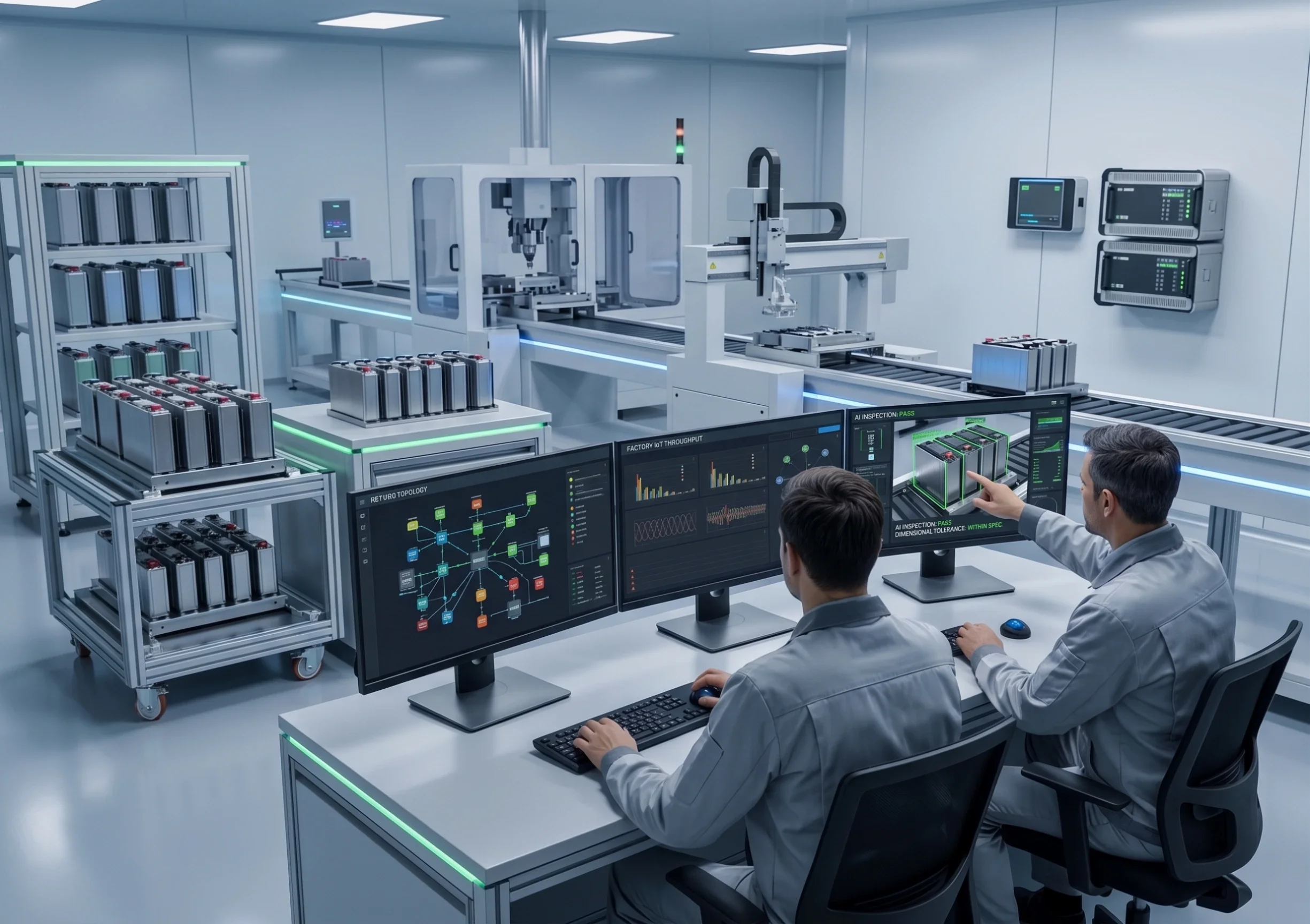
We engineer each layer to talk to the next — consistent naming conventions and OT networking underneath, so the EMS and EPMS functions draw on the same trusted components & data rather than two disconnected versions of the truth.
The right architecture depends on the site. A small commercial facility may only need monitoring and reporting. A data center, hospital or industrial plant may need many EPMS and EMS functions with resilient OT networking, cybersecurity controls and enterprise reporting. This is the reason we built EnergyX® as a single open platform spanning both, with lifecycle services carrying it from design through commissioning into long-term operation.
Start with the problem, not the acronym
If the problem is "we need to reduce energy cost, manage DERs, report emissions and improve energy performance" — you're talking about an EMS.
If the problem is "we need to protect uptime, understand power quality and manage critical electrical infrastructure" — you're talking about an EPMS.
If it's both — and for most mission-critical or multi-site operators, it is — the answer isn't EMS versus EPMS. It's designing the right combination of both around trusted data and clear operational objectives.
Frequently Asked Questions
-
If your facility is mission-critical, multi-site, or adding DERs to critical electrical infrastructure — yes, usually both, designed as one architecture. Simple sites may only need energy monitoring and reporting.
-
Not really. A BMS manages building services (primarily mechanical) and offers basic energy trends. A dedicated EMS adds power quality awareness, DER control, tariff intelligence, market participation and tenant-level allocation.
-
Yes — our EnergyX® platform is built to provide both functions on a single open IoT foundation, which avoids the integration gaps and data inconsistencies of running two disconnected systems.
-
The EPMS is on the critical path to power — without it, uptime and commissioning are at risk. The EMS becomes increasingly valuable as energy cost, carbon reporting and grid interaction grow. Mature operators run both.
-
In our experience: poor version control and quality assurance during engineering, custom one-off architectures that don't scale across sites, weak OT network design, and untrusted data. These are exactly the failure modes we were brought in to fix on a 190 MW hyperscale build — and the reason we standardize, automate and version-control every deployment.

About the author
Dan Wall is Executive GM (Digital) at AZZO, where he leads the company's digital strategy and the development and commercialization of its Cloud and IoT platforms — including EnergyX® — along with the cybersecurity standards and intellectual property that sit behind them.
He has spent his career in the business and technology of energy management. He has worked closely with operators of utilities, data centers, hospitals, commercial buildings and industrial facilities across every major region, and is known for an innovation-led, systems-thinking approach to bringing analytics and IoT into critical energy infrastructure.