
ENERGY ECOSYSTEMS EXPLAINED
For decades, energy systems followed a largely centralized, unidirectional model. Electricity was generated at large, remote facilities, delivered through transmission & distribution networks, and consumed by businesses as a passive input. For most organizations, energy management was limited to basic metering and utility billing.
The Energy Landscape Has Changed
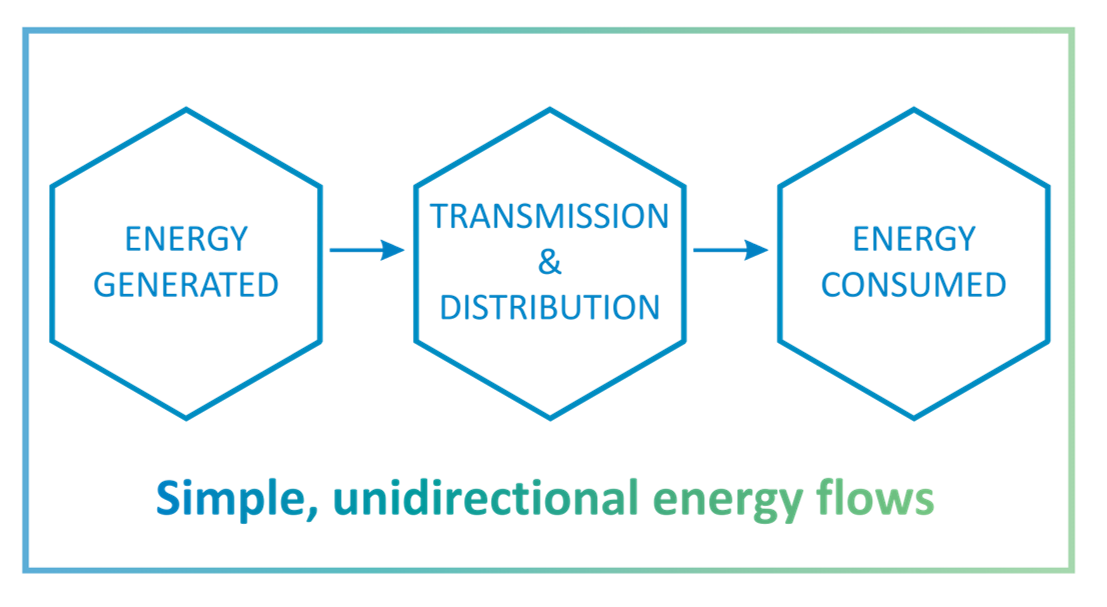

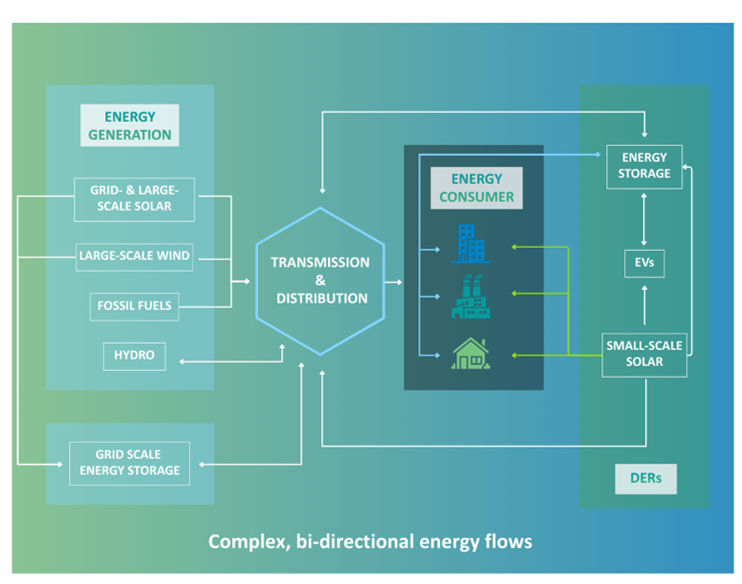
Today’s energy environment is distributed, digital, and increasingly interactive. Energy is generated & stored at a variety of points in the network and actively optimized against cost, sustainability, resilience, and market signals.
Businesses are no longer just energy consumers. They have become “prosumers" (producers & consumers) participating in a broader energy ecosystem. Likewise, utilities and infrastructure providers are no longer simply delivering energy, but coordinating increasingly complex networks of distributed assets, digital systems and market mechanisms.
What is an Energy Ecosystem?
An organization’s energy ecosystem is the interconnected set of stakeholders, technologies and business objectives that drive its energy generation, storage & consumption.
STAKEHOLDERS
Stakeholders are the individuals and groups who either depend on the energy ecosystem or are responsible for ensuring the ecosystem meets the business objectives.
CUSTOMERS are within the organization and oversee, operate, or manage energy flows and assets. This includes building owners, portfolio managers, operators, and energy managers responsible for cost control, performance, compliance, and resilience. Customers define the objectives of the energy ecosystem and ultimately bear the commercial & operational outcomes.

SUPPLIERS AND PARTNERS provide the technologies, services, and market access that enable the ecosystem to function. This group includes utilities, retailers, aggregators, equipment manufacturers, system integrators, consultants, and service providers. Their role is to deliver infrastructure, expertise, and capabilities that support customer objectives within regulatory and market constraints.
BUSINESS OBJECTIVES
Objectives define why the energy ecosystem exists and how success is measured. In practice, organizations balance multiple objectives simultaneously, often with trade-offs between them. Objectives are typically driven by projects and/or programs.
SUSTAINABLE AND COMPLIANT ENERGY
Focused on meeting environmental targets and regulatory obligations. It includes emissions reduction, renewable integration, sustainability reporting, and adherence to grid, market, and safety regulations. Compliance is not static—requirements evolve over time, increasing the need for adaptable systems.
ECONOMIC AND EFFICIENT ENERGY
Centered on minimizing costs and maximizing value from energy assets. This includes reducing energy spend, improving asset utilization, optimizing tariffs, and participating in incentive or market programs. Efficiency applies both to energy consumption and to the operational activities required to manage it.
SAFE AND SECURE ENERGY
Address the protection of people, assets, and systems. This includes electrical safety, equipment protection, cyber security, and secure operation of operational technology (OT) and data systems. As energy systems become more connected, managing security risk becomes increasingly critical.
RELIABLE AND RESILIENT ENERGY
Focus on maintaining continuity of operations under normal and abnormal conditions. This includes power quality, uptime, fault management, redundancy, and the ability to withstand and recover from outages, extreme weather, or grid disruptions.
TECHNOLOGIES
Technologies are the physical & digital foundation of the energy ecosystem.
ELECTRICAL & MECHANICAL
This category includes the core infrastructure required to produce, distribute, and consume energy. Examples include switchgear, transformers, protection devices, generators, and mechanical plant. These assets form the backbone of energy operations and are often long-lived and safety-critical.

DERs & LOADS
Distributed Energy Resources (DERs) introduce flexibility and complexity into the ecosystem. Common DERs include onsite solar, batteries, EV chargers, HVAC systems, industrial processes, and other controllable loads. These assets enable optimization and value stacking but require coordination to avoid operational risk.
DATA & PLATFORMS
This category represents the digital layer of signals and connected systems that drive the energy ecosystem. Data consists of real-time and forecast signals such as energy prices, irradiance, weather, and demand response signals.
Platforms—including DERMS, BMS, IACS, EMS, and orchestration systems, provide visibility, automate control, and optimize DERs and loads, converting raw data into operational and economic decisions and actions
As organizations grow and objectives evolve, each of these dimensions expands, becoming more complex and interconnected.
A sample energy ecosystem for the Australian commercial & industrial sector:
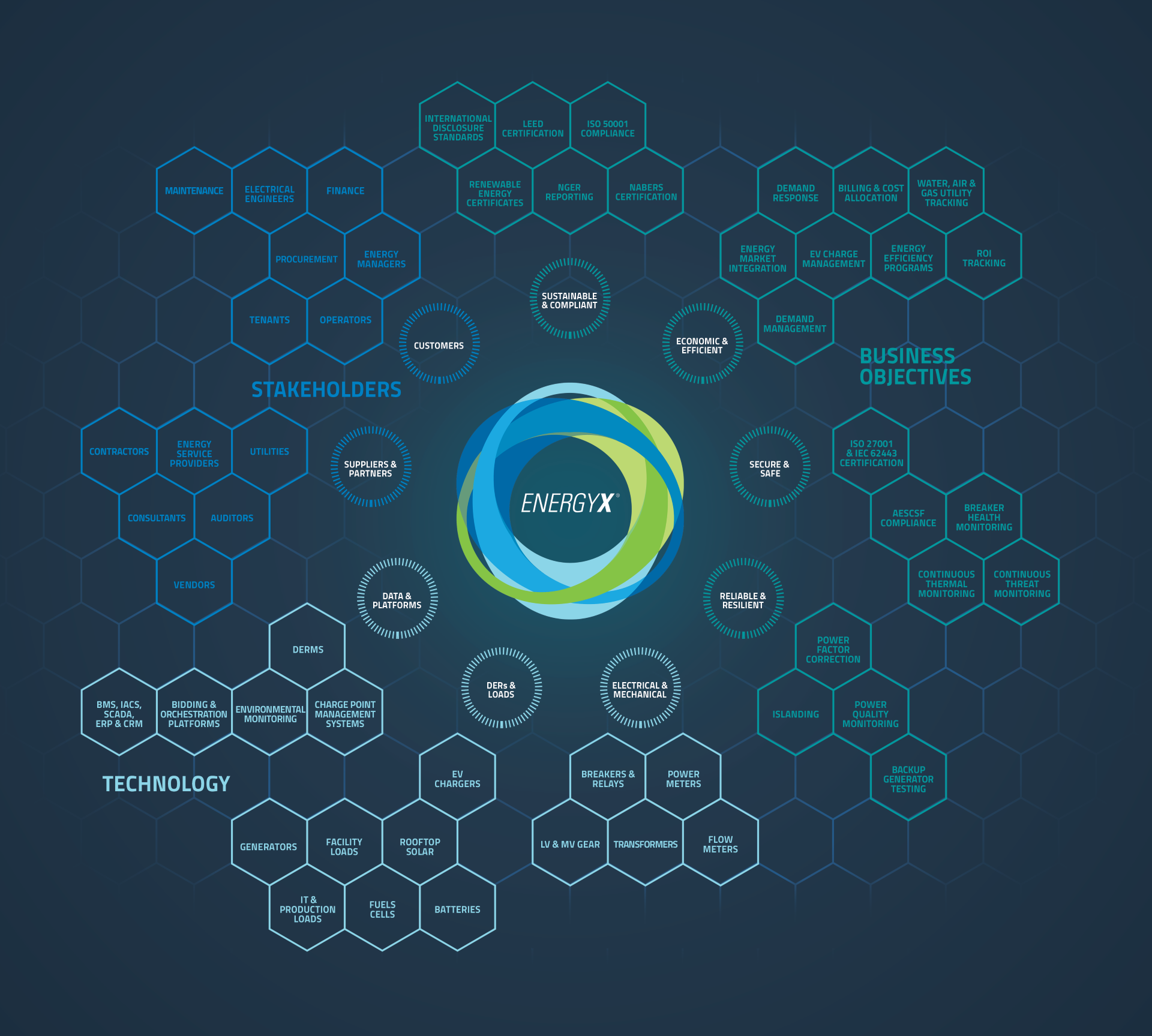
A sample ecosystem for generation & storage providers in Australia:
Energy Ecosystems Grow Over Time
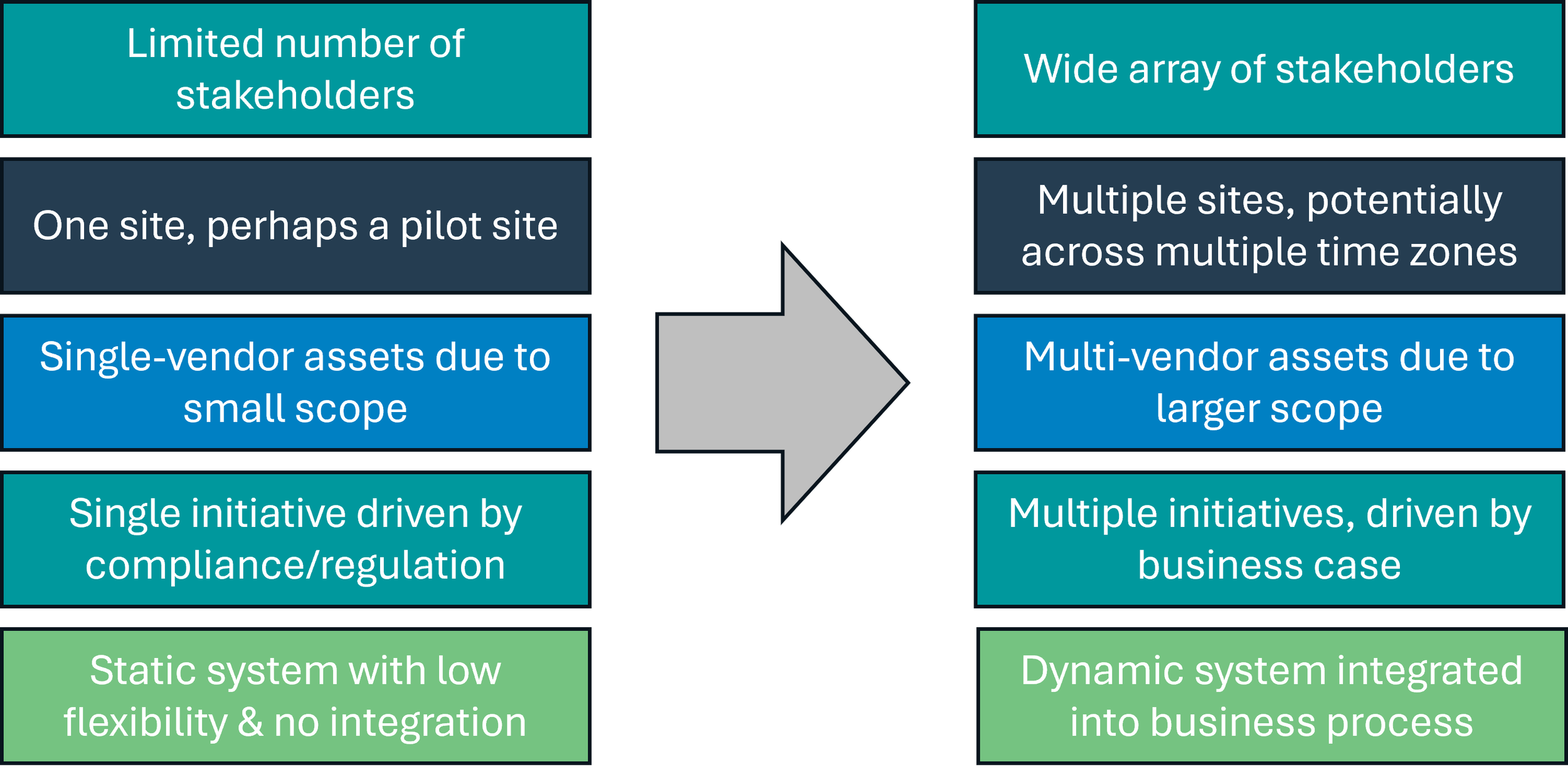
Businesses often start with a single business objective, focused on a one site, a small set of assets and few stakeholders.
For example,
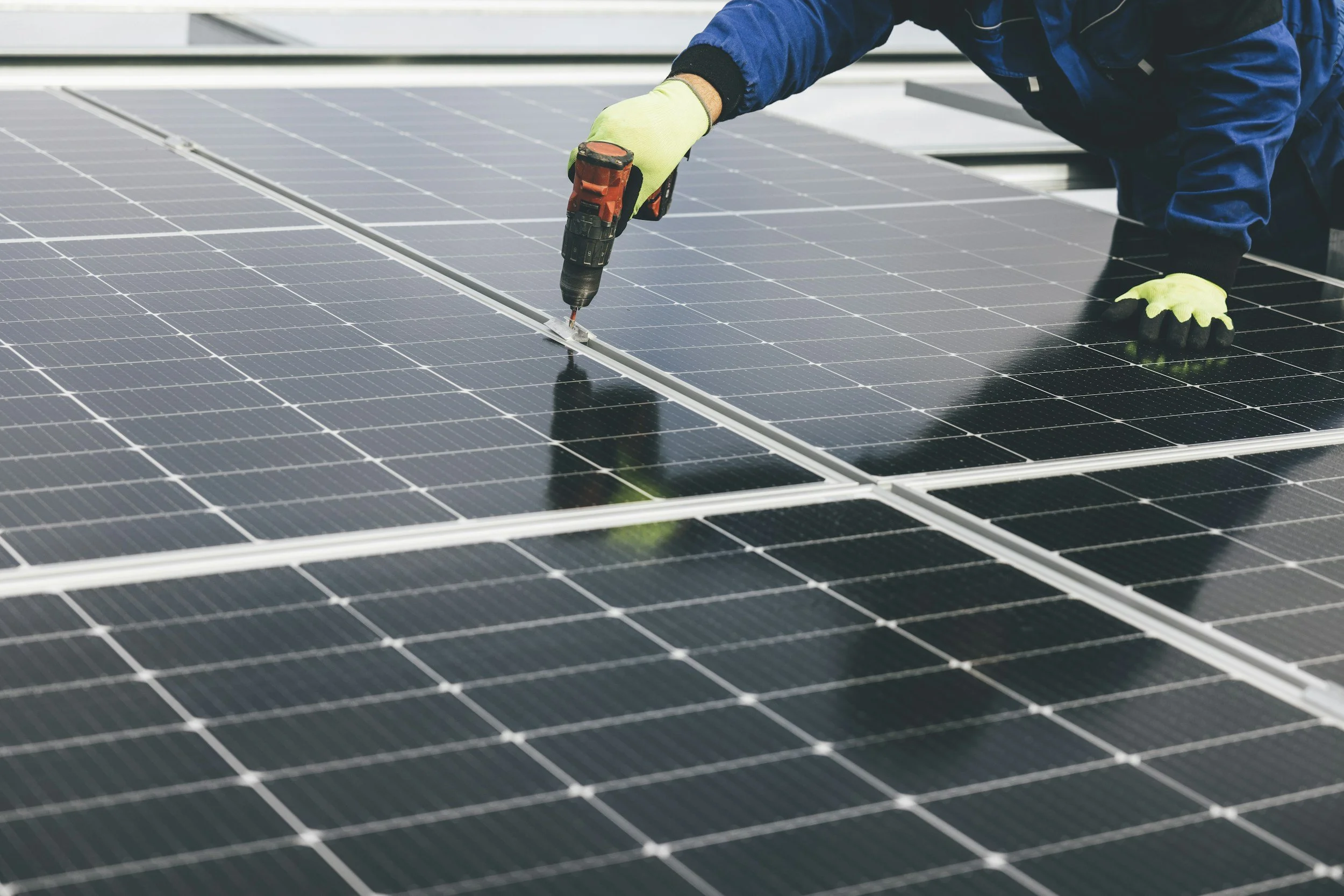
Installing onsite solar and/or batteries
Adding sub-metering for cost allocation or visibility
Addressing the cause of an electrical outage
Participating in a demand response program
Meeting a specific reporting or compliance requirement
However, as time goes by, priorities change and expand. Drivers of this change can include:
Portfolio or site expansion
Rising energy costs and tariff complexity
Increased electrification of operations and fleets
Stronger sustainability and emissions targets
Greater reliance on uptime and operational resilience

What begins as a standalone initiative often grows into a broader set of energy programs & strategies. New business objectives bring new stakeholders into the ecosystem and additional technology & assets are deployed.

Managing Ecosystem Complexity
As energy management initiatives evolve from a few isolated projects to a more interconnected & integrated ecosystem, it’s common to encounter challenges:
Disconnected subystems and data silos
Manual processes that do not scale
Limited visibility across sites and portfolios
Increased operational and cyber risk
Missed optimization and market opportunities
THERE ARE SEVERAL WAYS TO AVOID THE WORST OUTCOMES IN THE TRANSITION TO AN INTEGRATED ECOSYSTEM
-
Define a clear target architecture aligned to business, regulatory, and operational objectives
Prioritize use cases that deliver early value while fitting into a long-term roadmap
Establish governance models for data, integrations, cybersecurity, and vendor interoperability
Avoid point solutions that create technical or commercial lock-in
-
Demonstrated delivery across complex, multi-site energy environments
Deep understanding of energy markets, regulatory frameworks, and grid interactions
Capability to integrate OT, IT, and data platforms at scale
-
Solution design, engineering & installation services
Ongoing advisory services to drive continuous improvement
Support services for upgrades, and change management as requirements evolve
-
Modular and scalable platforms that support portfolio growth and new technologies
Open standards and API support to maximize interoperability
Support for advanced analytics, automation, and integration with AI platforms
Embed cybersecurity, resilience, and compliance by design
A strategy and roadmap that is aligned to your business objectives